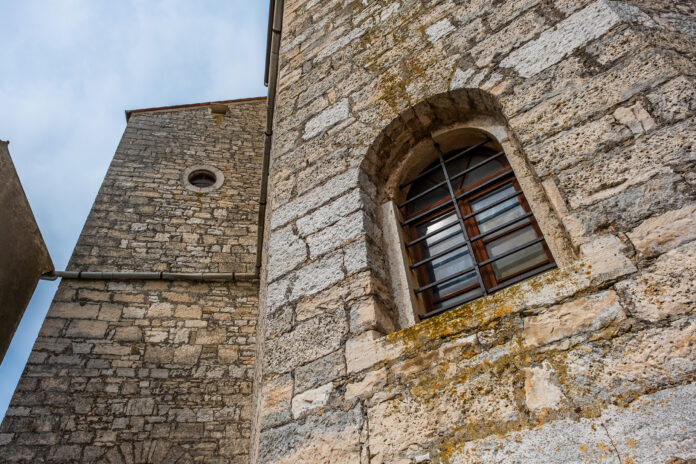
On the northwestern part of the Pelješac peninsula, in Dubrovnik-Neretva County in southern Croatia, lies Ston – a small town whose historical significance far exceeds its modest size. With just over 2,500 inhabitants, this place was for centuries one of the most strategically important strongholds of the Republic of Dubrovnik. Ston is best known for its monumental defensive walls, which stretch from Ston all the way to neighboring Mali Ston over a length of approximately 5.5 kilometers, making them the longest fortification system in Europe and the second longest in the world – right behind the Great Wall of China. Alongside the walls, Ston was immensely important throughout history thanks to its salt pans, one of the most valuable economic resources of the Republic of Dubrovnik, which remain in operation today as some of the oldest working salt pans in the world.
The history of Ston reaches back to antiquity, with Roman settlements once located in the area and traces of human presence confirmed in even earlier periods. A key turning point came in 1333, when the Republic of Dubrovnik acquired Pelješac and Ston from the Bosnian ban Stjepan II Kotromanić. Recognizing Ston’s exceptional strategic and economic importance, the people of Dubrovnik immediately began building a powerful defensive system. The walls were raised gradually throughout the 14th and 15th centuries, with their primary purpose being the protection of the salt pans that brought the Republic enormous revenue. Salt was a highly prized commodity in the medieval world, and the Ston salt pans secured Dubrovnik a monopoly over the salt trade across a wide area, significantly contributing to the wealth and political power of this small Adriatic state. The fortification system, reinforced with around forty towers and five fortresses, connects Ston and Mali Ston and is considered one of the most ambitious building undertakings of the Republic; today, visitors from around the world can climb the walls and enjoy stunning views of Pelješac, the Bay of Mali Ston, and the surrounding islands.
Today, Ston offers a unique blend of historical heritage, natural beauty, and gastronomic tradition. Its salt pans rank among Croatia’s most valuable cultural and economic monuments — salt production here has continued uninterrupted for more than 4,000 years, using traditional methods of evaporating seawater in shallow basins under the sun and wind. Ston and Mali Ston are also renowned for shellfish farming, particularly oysters and mussels, in the clean waters of the Bay of Mali Ston, with the Mali Ston oysters reputed to be among the finest in the entire Mediterranean. Beyond the walls and salt pans, the town features numerous churches and public buildings from the era of the Republic of Dubrovnik – notably the Rector’s Palace, the Church of St. Blaise, and the Franciscan monastery – that testify to its former importance. Tourism is now the most important economic activity, with visitors arriving to tour the walls, taste fresh oysters and local Ston salt, and enjoy the authentic Dalmatian atmosphere of a town that for centuries played a role far greater than its size, while also serving as a gateway for exploring the vineyards, beaches, and picturesque villages of the Pelješac peninsula.