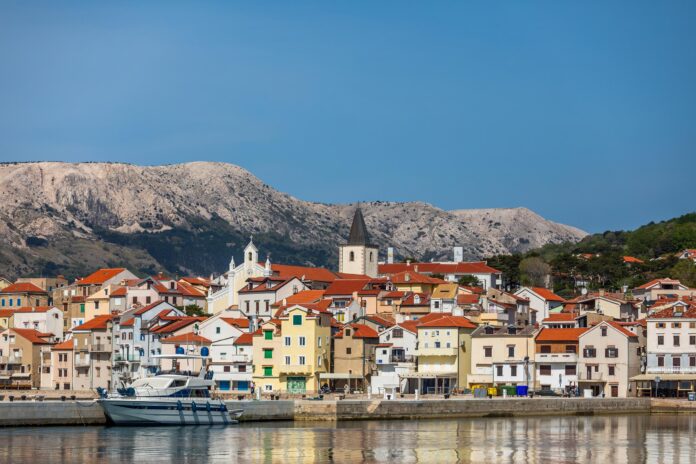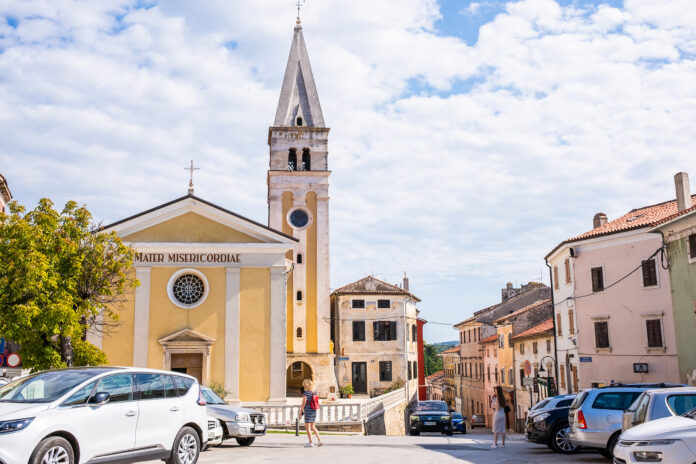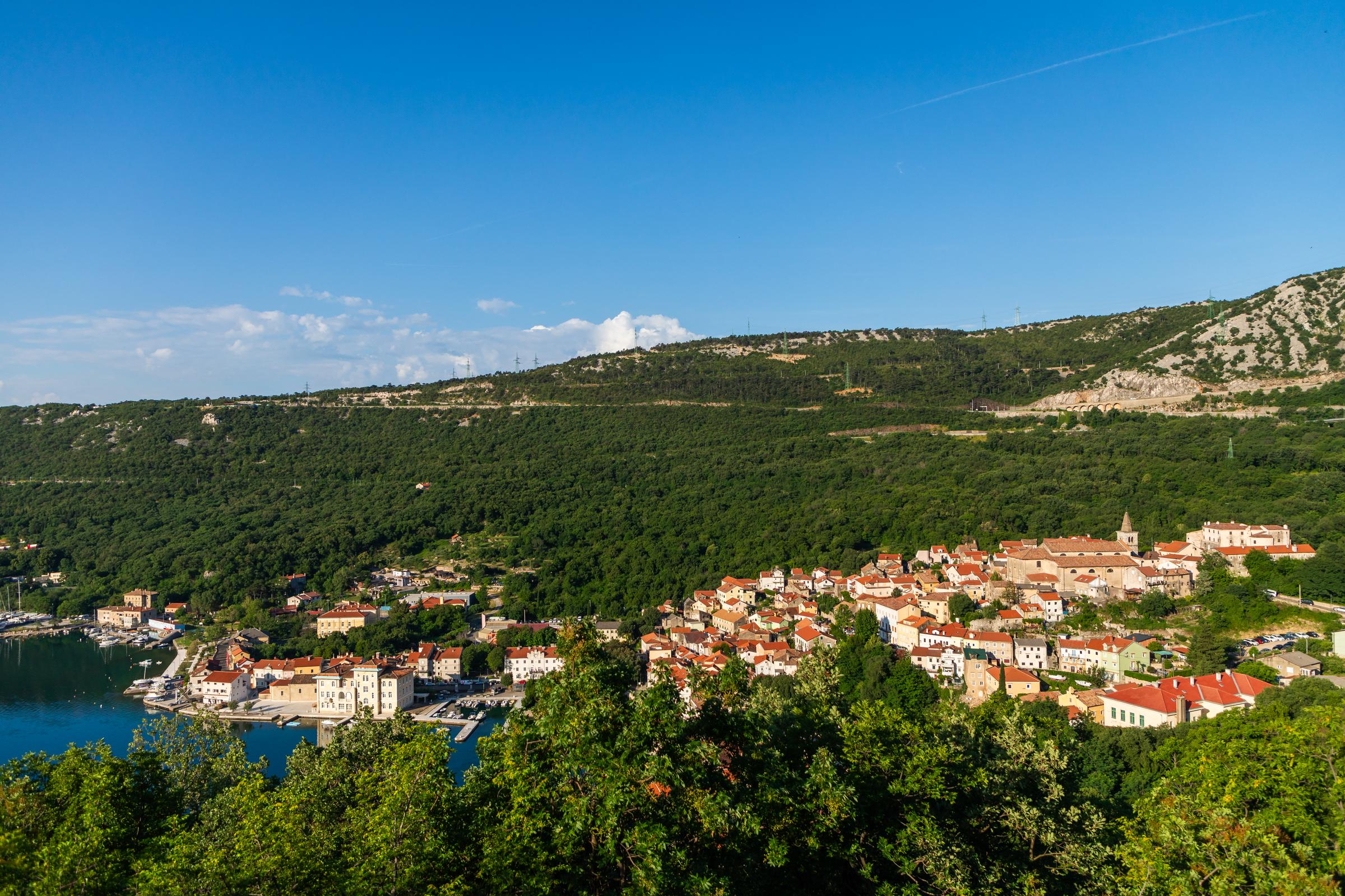
Bakar is a town and port located in the Bay of Bakar, part of Primorje-Gorski Kotar County on the northern coast of the Adriatic Sea. It sits on a hill in the northwestern part of the bay, surrounded by hills reaching up to 300 m in altitude. Its historic core, declared a cultural monument in 1968, is divided into the older upper section known as “Grad” (Town), once enclosed by city walls, and the lower section comprising the “Zagrad” and “Primorje” districts. With its Mediterranean climate and architecture, the town is full of winding, narrow, steep, and stepped streets and small squares. The town of Rijeka lies about 15 km to the northwest.
Various legends surround the town’s origins, from Jews fleeing the Roman emperor Titus’s destruction of Jerusalem in the 1st century, to a settlement founded by the Illyrians who assimilated the earlier Celtic inhabitants. Most likely, a sizeable Roman settlement named Volcera once stood here. The names Bukar and Bkri, along with the Italian name Buccari, appear in the 13th century, and the town’s name is first recorded in the Vinodol Codex (1288). It may derive from a nearby copper-ore mine (“bakar” means copper) or from the word “bukara,” a wooden jug whose shape resembles the Bay of Bakar.
The town’s fortification dates back to the early Middle Ages and the Migration Period, when the population relocated to a hill rising 50 m above the sea, whose flat top proved ideal for a castle, the Kaštel. Under the Counts of Krk, the fortress gained thick defensive walls and reinforced towers, with comfortable interiors that included chapels, kitchens, a cistern, and spacious halls. After a strong earthquake destroyed its upper floors in 1775, repairs left it covered by a single roof, stripping away its picturesque appearance. The fortress later served as a textile manufactory, a maritime school cabinet, and an Austrian army barracks. In 1848, the great stone Ban’s Gate, commissioned by Ban Josip Jelačić, was built and still stands today.